VIEWPOINTS | The Sustainability Reset

Authored by , Senior Editor, Criticaleye
There’s no doubt that the external narrative around sustainability has shifted over the last 18 months, but behind the scenes companies continue to navigate the challenges and opportunities associated with the transition to a sustainable future.
While certain organisations have rolled back on previously stated commitments, there’s been broad acknowledgement that some of the previous approaches to sustainability lacked the necessary foundational data or realism to set targets, were driven by hope rather than experience, or may even have been opportunistic without any consideration for what it would take to achieve. The latter in particular has resulted in inevitable accusations of greenwash.
Former UK&I CEO of Unilever,
Sebastian Munden, holds a great vantage point to assess what’s changed in the world of corporate sustainability. Since 2022, he has been Chair of WRAP (Waste and Resources Action Programme), an organisation that works with businesses and governments globally to promote the circular economy and tackle the causes of climate change, waste and pollution.
In this Q&A with Criticaleye, Sebastian discusses how some companies are rethinking their approaches for maximum impact, along with the mindset shift required to remain competitive in a changing world.
Q: How should leaders be thinking about the challenges stemming from climate change and biodiversity risk?
A: I see this as strategic clarity, defining the future in which your business needs to succeed – the first step to creating actions to future proof the business. If you're a supermarket or food company, or indeed many other types of businesses, you're thinking about the stability and resilience of your supply chain into the future, how to optimise it and how to continue to make your product better in that emerging context. I think that's the way people who are doing the right stuff are looking at it.
Of course, there'll be a part of the organisation which is about performance and reporting, but actually the motivation for leaders should be coming from understanding the stakeholders of the business, and how it will successfully serve them. It's a strategy conversation.
Q: How has target-setting changed for corporates?
A: After nearly a decade of experience setting targets, now is a good time to focus on the priority targets – the ones the business really needs to get and really intends to achieve. There may be fewer of them, and they may be slightly less stretching than the targets based on hope from the past, but if leaders really intend to hit them, that’s progress. I think that embedding sustainability targets into the LTIPs of senior leaders is absolutely essential to support this, as a business would with all future-critical targets.
Q: What should companies do before setting targets that can realistically be achieved?
A: We all know that any great action plan starts with ‘where are we today?’ and ‘where do we want to get to by a certain point?’ I think that ‘level-setting’ or ‘baselining’ of key sustainability data is really important. Organisations – like WRAP in food and drink, and Ad Net Zero in advertising and media – provide that impartial definition for data that companies need. It's only with that kind of foundation that companies can begin to say how they will deal with the gap to the target.
That's an important development. With strategic clarity for future-proofing and baseline data, [having] that action plan moves it [the debate] from morality to materiality, and companies are good at materiality.
Q: How should these issues be framed for maximum impact?
A: I think we have to reframe sustainability from being perceived as ‘semi-charitable’ or a moral issue, to being about business survival in the future and business optimisation now. And I see this across all the industries I work with.
In the media world, reducing carbon in digital is a money-saving, media quality activity. With this kind of approach, it feels like we're walking sustainability back off the window ledge and back into the room, where it's a practical issue, it's a business issue: Chase carbon, find wasted money. Reduce both.
Q: What level of responsibility do businesses have to deliver sustainability progress for their stakeholders?
A: We don't expect shoppers to understand the intricacies of biodiversity or packaging material recyclability, but as businesses we do. So, we need to ask: ‘What would our customers expect us to do with what we know?’
I found that question motivated my career at Unilever, a consumer-driven business. We understand what our customers expect of us and we get on with it. Of course we have to hit our targets, and we have to do what our customers would expect us to do if they knew what we knew. In fact, the two are ultimately connected.

.png)
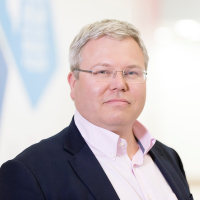 Sebastian Munden
 Displaying 1 to 3 of 234