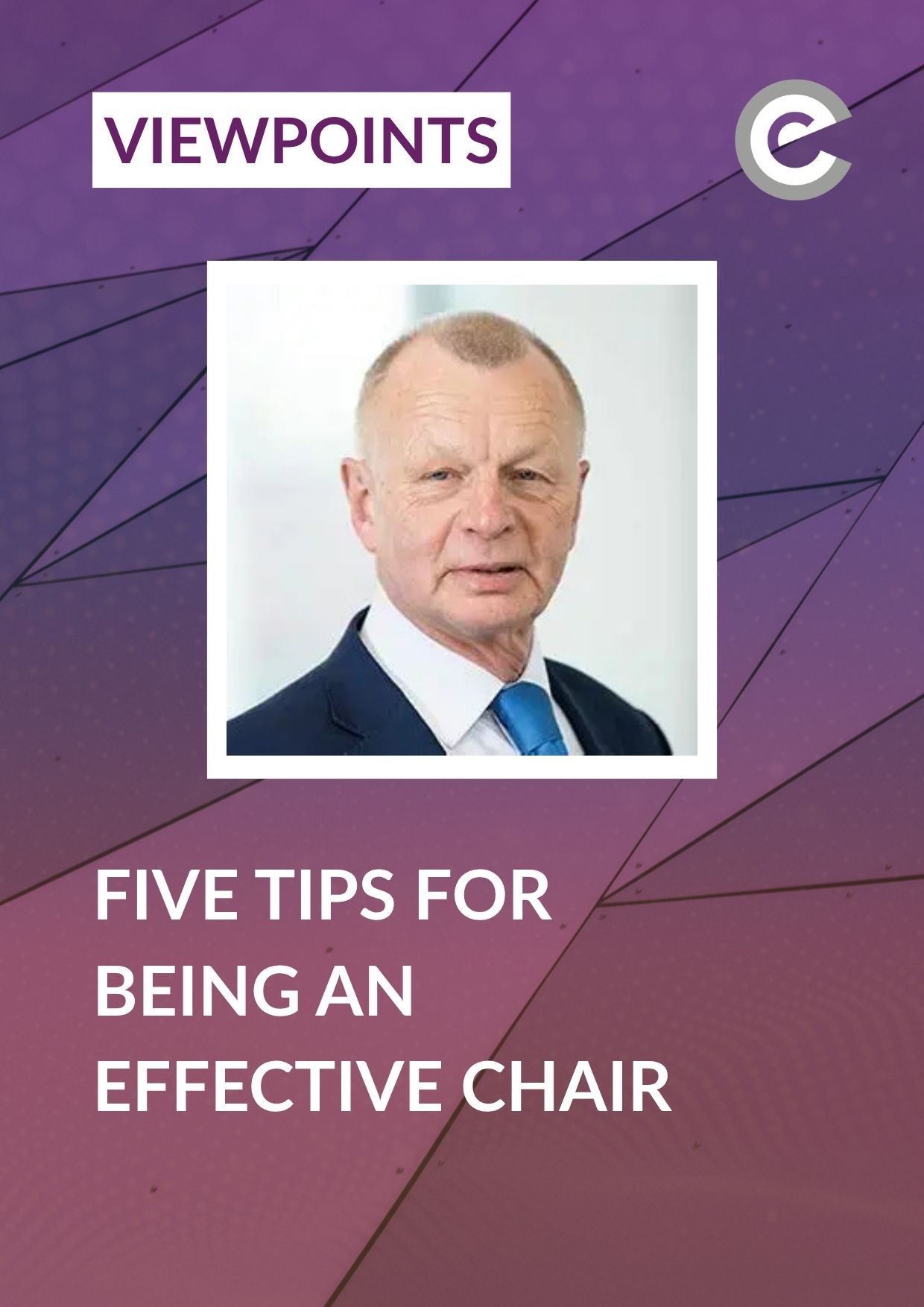
VIEWPOINTS | Five Tips For Being an Effective Chair

Authored by Marc Barber, Director of Content, Criticaleye

Paul Lester has Chaired an impressive array of publicly listed, private equity-backed and family-owned businesses over the years, such as FirstPort, Readypower, Forterra, and Essentra.   
 
Currently, he’s Chair of McCarthy Stone, a property company backed by the US PE house Lone Star Funds, Telent (formerly known as Marconi), and the privately-owned Funeral Partners.  
 
Criticaleye interviewed Paul on what it takes to be an effective Chair. Here are five key points from the discussion:   
 
No Egos in the Boardroom
 
“There are no ‘airs and graces’ and certainly no one with egos. We don’t want that — we’re after their knowledge, intellect, and I also want it to be the case that they never walk away from a Board meeting wishing that they had said something.” 
 
Creating an environment where people speak freely, where no voice dominates and no question goes unasked, is an active responsibility. Strong characters are inevitable in any Boardroom, but mutual respect and trust must come first. Without them, personalities start to dominate and open discussion becomes difficult. The goal is a down-to-earth atmosphere that non-executive directors genuinely look forward to and enjoy (and the executives too). 
 
The CEO and Chair Relationship  
 
“I would say the ultimate point of inflection is where you get a call and they say, ‘Can you join a pre-strategy meeting and get involved in it early?’ It’s that early involvement in something that lets you know you have crossed a bridge.” 
 
Technical expertise keeps governance on track, but nothing shapes a Chair's effectiveness more than the quality of their relationship with the CEO — and it can't be forced. It develops through consistent behaviour, candid dialogue and a willingness to be useful without overstepping the mark. Being invited in before decisions are made, rather than simply ratifying them afterwards, is the signal that the relationship has reached a genuinely collaborative level. 

Culture Really Matters  
 
“You can pick up on the atmosphere and culture of a business pretty quickly. If I go to a factory and walk around, I can tell whether the place is health and safety conscious, or whether people are happy or miserable. It’s the same on a construction site; you get a feel for it straight away. You can’t rely on the figures you’re given, that’s for sure.” 
 
Management reporting is always a curated view. The Chair who makes a habit of seeing the business directly develops a feel for culture and morale that no set of figures can replace. The Chairs who spot problems earliest are usually the ones who've made a habit of being present in the business, not just in the Boardroom. 

 
The Chair Role can get Lonely
 
“They say the CEO role is a lonely job, but I don’t believe that because you’ve got a team. The trouble when you’re a Chair is that you haven’t got a team.” 
 
The shift from executive to non-executive life removes many of the structures that made leadership feel manageable. It’s an adjustment that catches more people off guard than they expect. Whether you're a former CEO, CFO or senior executive, going plural means actively building a network of peer-level conversations: fellow Chairs, senior leaders, informal catch-ups.  
 
Build the network before the isolation arrives. 
 
Speak Freely
 
“It’s about asking the right questions which, of course, can come over as negative, but asking a good question should never be a problem for a CEO and the management team.” 
 
A Board where people hold back is a Board that underperforms. Across Criticaleye's Chair Ready Programme, Chairs have repeatedly described walking into organisations where the Board dynamics are in the wrong place: dominant CEOs; weak governance; and competing personal agendas.   
 
It's the Chair's job to create the conditions where there is constructive support and challenge in the Boardroom, so that each Board member can speak freely and ask informed questions about the topics of the day. 
 
To read the full interview with Paul, click here.  
 

Share this with your Community


Contributor
Paul Lester CBE
Non-executive Chair
McCarthy Stone


Click here to download this insight

DOWNLOAD INSIGHT


Related Insights

Read, watch & listen to some of the latest thought leadership from our Community.

Click here to download this insight

VIEWPOINTS | Making the Leap from CPO to NED

Tea Colaianni MBE's career began in Brussels as a lawyer before deciding  she wanted to be in the driving seat. "I didn't want just to be advising companies on what to do: I wanted to do stuff,...


Click here to download this insight

Giving Back as a Non-executive Director

Following a growth-laden five years as CEO of IRIS Software Group, Elona Mortimer-Zhika is now enjoying a burgeoning non-executive career. In this interview with Criticaleye’s Jacob Ambrose Willson, she explain...


Claire Ainscough, CPO at Ocado on Leading People and Culture

Claire Ainscough, Chief People Officer (CPO) at Ocado Group joins Bridgette Hall to explore what it takes to lead the people agenda in a fast-moving, technology-driven business. As ...


1 2 3 4 5 6 7 8 9 10
Displaying 1 to 3 of 88


Mayborn Group Global Payments Lightsource bp British Land Legal & General Stream AlixPartners GlaxoSmithKline plc Southern Water NATS Rolls-Royce NatWest Group London Stock Exchange Group Aldermore Group Hitachi Solutions E.ON UK Drax Group plc LACE Partners