A reset is underway as senior leaders ask existential questions about the efficacy of their business models. There is a pressing need for improved efficiency and greater strategic clarity, whereby organisations focus on the right customers and market segments.
There are multiple factors driving this, whether it’s shareholders and investors, new competitors, technology, or shifting costs associated with scale. A central point for discussion and debate on Day One of Criticaleye’s Leadership Retreat, held in Partnership with AlixPartners and Stream, was about getting back to first principles.
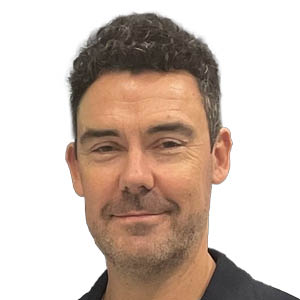
Mark Endemaño, Partner and Managing Director, AlixPartners, said in his Keynote: “One of the themes that we often work with leadership teams on is business simplification – retrenching back to the things that we should be fantastic at and getting absolutely nailed, and trying to strip away all of the noise, shadow functions and confusion of accountability that often naturally develops over time in organisations.”
He noted the importance of governance, processes, technology, culture and how these lock together: “A new operating model is often needed because there has been a change in the strategy, business model, ownership, or typically some other kind of exogenous shock within their operating environment.”
Technology has a vital role to play. “[AI] is part of every single element of process change,” he told the audience. “If you're doing a transformation and a cost initiative programme, inevitably you will always be thinking about the best way to get the same output quality at a lower cost and a faster rate, and technology can, of course, support that.
“But you need to crystallise this around specific use cases where there is enough clarity and maturity of the solution set to mean that you're not going to create your own new tech debt for the future.”
Risk and Reward
When it comes to technology and AI, the general consensus at the Leadership Retreat was that this is not something that can be delegated to the Chief Information Officer or Chief Technology Officer anymore.
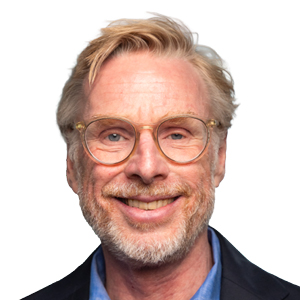
Serena Lang, Chair of Trifast and a Board Mentor at Criticaleye, commented: “Technology and AI should be owned by the CEO and CFO. It’s no longer a support function. It’s about forward strategy as it has got such an ability to disrupt the business operating model.”
It falls upon the Chair and non-executive directors to assess both the opportunities and risks involved in investing in new technology. She continued: “At a Board level, when we look at how we prioritise risk… all organisations are having to say that we've overseen and signed [off] our internal controls. That for me is a good opportunity for Boards and teams to look at what our risk appetite is…
“And so you look at the benefits and you look at the returns and ask: ‘What's the problem you're trying to solve?’ Because if you're not looking at it from that perspective, and you're just saying, ‘I need this system or that system’, there's no benefit to it.”
Keep Composed
Greater strategic clarity enables senior leaders to move faster on building out capacity and market access, whether that is organically or via M&A.
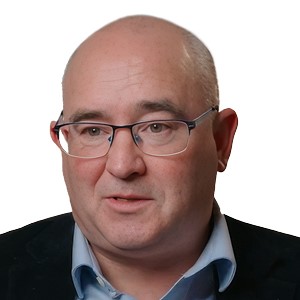
Frank Lemmink, Group CFO, Drax Group Plc, a global renewable and flexible generation energy company, has been driving growth and expansion in core areas. “Over the past year, we’ve broadened our portfolio from four generation sites to more than 200 sites, with approximately 6.1GW of capacity under management,” he explained.
“That portfolio now spans biomass, hydro, pumped storage, OCGT [Open Cycle Gas Turbine], solar, wind and batteries, supported by our optimisation capabilities. It gives us a broader mix of renewable generation, storage and flexibility, with a clear focus on disciplined growth in the UK.”
Given the sector, it’s understandable that Frank stresses the need for transparency around roles and responsibilities when spearheading this drive for expansion. “The majority of the business remains focused on delivering safe, reliable power day-to-day, with a strong emphasis on operational excellence and cost discipline. Alongside that, we have dedicated teams with clear accountabilities focused on executing our growth opportunities.”
At the Leadership Retreat, attendees were asked to identify one bold transformation they would like to undertake in their respective organisations. The dominant answer was ‘AI’, followed closely by ‘culture’. It serves as a reminder that the organisations most likely to succeed are the ones where people have the right skills and mindset, which puts a premium on how leaders both engage and communicate.
Matthew Blagg, CEO of Criticaleye, commented: “We are seeing simplification as capital flows into clearer structures. So, being complex is probably a barrier right now although, of course, not in all cases.
“Senior leaders have also got to be very clear communicators and, within that, you've got to be able to communicate the risks. The great leaders that you see in any sector or market are succinct and have that unique ability to create calmness when there is chaos.”
Given all the noise and distractions, it’s fair to say that the senior leaders who retain a sangfroid air – on the outside at least – will also be the ones who are not only able to be bold but can galvanise people within their organisations to get behind those decisions.
Share this with your Community
Contributors
Mark Endemano
Partner and Managing Director AlixPartners
Serena Lang
Board Mentor Criticaleye
Frank Lemmink
Group CFO Drax Group plc
Matthew Blagg
CEO Criticaleye
For leaders undertaking complex transformation programmes, Criticaleye's highly bespoke leadership development offers CEOs and senior executives the chance to discuss and compare approaches with peers from different organisations, sectors and regions.
Get in touch with our team to discuss how to join our global Community of senior leaders.
Subscribe to Our Newsletter!
Get the latest leadership content straight to you.