The Chief Financial Officer needs to be a strategic partner at the top table, working closely with the CEO to agree investment plans, drive performance and engage with key stakeholders about the future trajectory of the business. At the same time, they must have a finance function that’s fit for purpose.
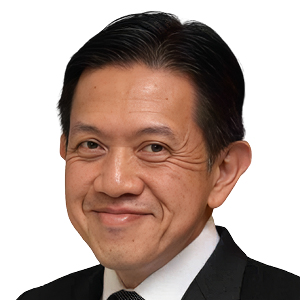
Andrew Chew is Group CFO at GuocoLand Group – one of Singapore’s most prominent real estate developers. In a recent interview with Criticaleye, he said that his role is “…not just about operations and numbers”.
He explained: “It's more about working together with the CEO around investor relations to shape the narrative and provide clarity to the investors, bankers and various parties, in order to give them confidence of our company's direction.”
The CFO role continues to have enormous breadth, often touching all aspects of an organisation.
Iain Lewis, CFO of UK-based oil and gas producer Ithaca Energy, said: “My role over the last three years has been very broad: establishing the listed business, adding value through M&A and business performance, leading the business through what was a very transformational deal, integrating the businesses and taking shareholders with us, as well as raising a lot of finance. Nearly £4 billion of finance has been raised over the last two years.”
There is also the question of how to create a high-performing finance function. Andrew said since taking on the role of Group CFO at GuocoLand, which is listed on the Singapore Stock Exchange, he has made changes so that the function has evolved “from purely ‘back-office’”, where the focus was largely on operations, management and statutory reporting, “into one where we are now a true business partner”. He added that “finance supports key decisions such as M&A, JVs, land acquisitions, asset recycling and capital structure optimisation across the groups”.
CFO-CEO Partnership
While it’s always been an integral aspect in any successful business, the relationship between the CFO and the CEO is taking on even greater importance.
Joe Dische, CFO of private equity-backed PropertyGuru Group, reflected on the partnership at the Southeast Asian property firm. “If you’ve got a good CFO and CEO relationship, it can really push the envelope,” he commented.
“The CEO knows that somebody is going to pull them back a bit if they’re pushing too hard. That was a cornerstone of how our relationship worked. He would, for example, push hard on product or pricing or hiring or M&A opportunities, and I would be there to support, but also sometimes to say, ‘Look, maybe we’re trying to do too much. We should slow down here, or maybe we should quicken up there.’”
The current macroeconomic landscape is only underlining the importance of the CFO’s voice within the partnership. Andrew said: “[B]ecause of all this [macro] uncertainty, I’m working a lot more closely with the CEO and investment director to reprioritise some of our capital allocation, reviewing the type of assets that we should continue to be in and divesting non-core assets. For example, GuocoLand recently sold off one of our hotel assets which was considered non-core.”
Neya Patel, Senior Account Executive and CFO Lead at Criticaleye, commented: “The degrees of risk facing businesses show no sign of relenting at present, from geopolitics to regulation, changing consumer sentiment and cyber. What’s interesting is these pressures no longer fall squarely on the shoulders of the CEO; nowadays the CFO is increasingly pulled in to provide another leadership lens.
“When the dynamic between the two is right, they’ll find ways to navigate these risks to unlock opportunities and create value.”
Building on this idea,
Ed Jones, Chair of WightLink Ferries and a Criticaleye Board Mentor, said: “In the past, some CFOs were passively focused on managing compliance risks. Now, the CFO is expected to be a risk strategist who balances value creation with managing risk. And therefore, that's about looking at enterprise-wide risks right across the business.
Ed, who was a former CFO at Carnival UK, continued: “Disruption is a constant in the world. There's clearly more events happening, both good and bad, and therefore it's absolutely imperative for the CFO and other leaders to scan for both opportunities and threats.”
As with any senior leadership role today, it’s about possessing that ability to think beyond the functional elements of a role and seeing the bigger, strategic picture. Joe summarised: “Really good CFOs are meant to be much more well-rounded commercial leaders in the organisation…
“You can’t be socially dysfunctional and incapable of explaining things to investors or to staff. You need to be inspiring in the way that you communicate. I think the biggest change is that you need to be an all-round business leader.”
Excerpts in this article have been taken from recent editions of Criticaleye's 'CFO Interviews' series. You can read the full articles here: